The History of the Honda Civic
June 10 2022 - admin@wikimotive.com
 When you think of compact cars, the Honda Civic is likely one of the first to come to mind. Over 50 years, the Civic has made its way into millions of homes and earned the following of brand enthusiasts whose loyalty spans generations. The Civic pulls plenty of customers to Ryan Honda of Minot, your used Honda dealership, looking for what they know will be an affordable, reliable car. What they may not know is the wealth of history the Honda Civic represents. It has survived recessions, government mandates, and rapid market changes and has thrived in spite of these seemingly insurmountable obstacles. It’s also a grandfather of sorts, whose success served as the launching point for what would become other iconic models, like the Accord. Compact cars aren’t known for setting hearts afire or inspiring adrenaline spikes, but this particular backstory may shift your perspective as you sit behind the surprisingly-exciting wheel of the Honda Civic.
Humble Beginnings
When the Civic was introduced in 1972, Honda was just starting to branch into the car market after getting its start in motorcycles. The Civic was one of Honda’s earliest automotive ventures and the first to find commercial success. Its debut in the United States couldn’t have come at a better time, serving as a breath of fresh air in a market overloaded with gas-guzzling V8 sedans. When an oil embargo in 1973 caused a sharp rise in fuel prices, the Civic was ready to shine. Its success wasn’t all about good timing, though. The Civic’s design was simple yet sophisticated, with plenty of cutting-edge technology stuffed into its small frame. Honda pioneered the Compound Vortex Controlled Combustion (CVCC) engine, which made the Civic clean enough to adhere to the new emission standards mandated by the Clean Air Act of 1970 without needing a catalytic converter. Unlike other cars with catalytic converters (which was the large majority in the United States starting in 1975), the Civic was able to run on regular or unleaded gasoline, a major advantage at a time when fuel was both limited and expensive. Adding to the versatility of the Civic were several different options for body styles: coupe, station wagon, and hatchback. The Civic also had front and rear independent suspension, meaning all four tires were able to move independently of one another, creating a smoother ride and better handling. Early Civics didn’t have a lot of options, but one of them was a semi-automatic transmission, dubbed Hondamatic. The early Civic was a huge hit, and several vehicles would follow that used the same mold.Middling Years
Following the success of its first generation, the Civic continued to improve, cycling through generations every few years. Honda was able to keep things fresh through rapid generational changes, responding to market changes and customer feedback promptly, a trend that started with the second generation. As hair ballooned in size in the 1980s, the Honda Civic followed suit with the introduction of the new generation. It was much larger than its predecessor and debuted a new, more powerful engine and a range of transmission options. As time went on, body style options continued to expand, and different trim levels were added to the lineup, making the Civic a car that could be configured to a much larger spread of tastes and lifestyles. The Civic continued to pick up several new parts and awards along the way and spurred the creation of several derivatives, like the upsized Accord and the luxury Integra. It even became a popular tuner car in the 1990s due to its good bones and low price point. The Civic’s look evolved over the years, getting box-shaped and then smoothing out, and adopting its flashiest aesthetic yet with the tenth generation, before settling into the more subdued style that we see in new Hondas today. Despite all of these changes, the Civic stayed true to its original blueprint as a high-quality and affordable ride. It earned its reputation as that car that runs forever while expanding options to accommodate a larger portion of the population.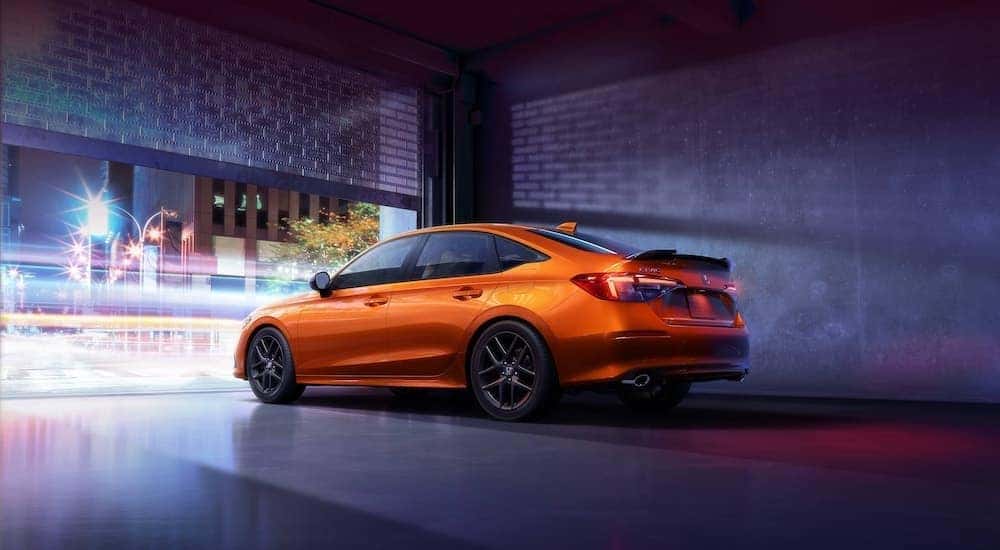 The Civic is one of the most iconic compact cars but displays its ability to wear many different hats by racing into the performance segment of the market as well. While the Civic Si was doing laps in the Japanese market starting in 1984, the United States got the Civic S, a sporty ride, no doubt, but not quite as zippy as the Si due to a smaller engine. When the Si did come to the United States, it started as a trim for the Civic CRX, which was a two-seater Civic wrapped in a more aerodynamic package with sportier finishes. The CRX line eventually ended, but the Si badge lives on to this day, now delivering 200 hp paired with an engaging 6-speed manual transmission.
Future Civics
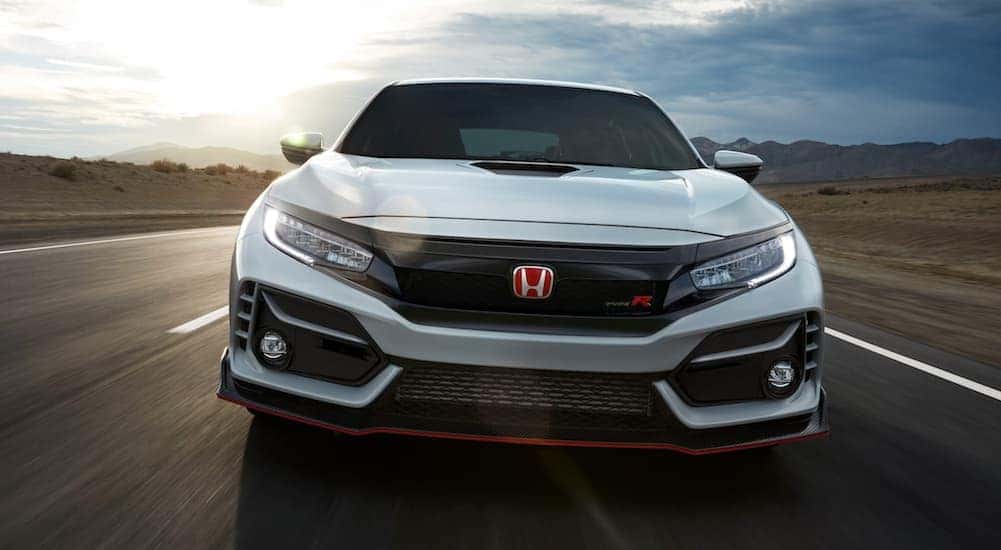
Honda has its finger on the pulse of the market, listening and responding quickly to customer feedback. This has undoubtedly contributed to the Civic’s success and has meant it has undergone transformation after transformation throughout its tenure. Although a lot about the Civic has changed over the years, it’s still an economical car whose value outpaces its price. It’s now in its eleventh generation and is all grown up with understated styling and sophisticated technology. It comes in either a fastback sedan or hatchback body style and includes the Honda Sensing Suite, a package of driver assistance features that increase driver safety and convenience. The near future looks bright for the Civic; the newest Civic Type R, part of the eleventh generation, will be available to the public starting with the 2023 model year. The track-oriented Type R debuted in Japan in 1997 and in the United States in 2017. It kicked off its inaugural year in the States by smashing the front-wheel drive record for the Nurburgring with a lap time of 7:43.8. The newest Type R will maintain its turbocharged inline-4 and manual transmission as standard options, an electrifying combination. Speaking of electrification, the next era of the Civic will be even greener. Honda announced that it plans to launch 30 electric vehicles by 2030. As part of those plans, the Honda Insight––which is essentially a hybrid version of the Civic––will be dropped after the 2022 model year, with a true Civic Hybrid slated to take its place.