Honda CR-V: The Next Generation
May 13 2022 - admin@wikimotive.com

The First Generation of CR-V
In the late 90s, the folks at Honda decided they wanted to explore building their first SUV. Until this point in the company’s history, the focus was on sedans like the Accord, subcompacts like the Civic, and minivans like the Odyssey. A decision was made to go outside its comfort zone and develop a compact, 5-passenger SUV built on its successful Civic platform. The resulting vehicle came to be the Honda CR-V, introduced in time for the 1997 model year. Those first CR-V models had a boxy look, with a distinctive full-size spare tire attached to the horizontal swinging rear trunk. Despite the compact, square appearance, the interior of the CR-V proved quite roomy, with a full 98 cubic feet of space for the passengers. This included an impressive 41.5-inches of legroom in the rear row of seats, which was longer than the 40.5-inches of legroom for the front row passenger and driver. In addition, the first-generation CR-V gave its owners an impressive 67.2 cubic feet of trunk space with the rear row of seats folded down. Although it was built on the Civic platform, the CR-V afforded drivers 8.1-inches of ground clearance as the suspension lifted higher than its compact sedan predecessor. In addition, the CR-V came equipped with a 2.0-liter i-VTEC 4-cylinder gas engine with a choice of manual or automatic transmission. This engine leveraged Honda’s variable valve timing technology to produce 126 hp at 5400 rpm and 133 lb-ft of torque at 4300 rpm. The estimated fuel economy of 19 miles per gallon (MPG) in the city, 23 MPG on the highway, and 21 MPG combined was solid, if unspectacular. [a] In addition, the initial engine on the first generation CR-V was given a boost to 146 hp at 6200 rpm to provide improved acceleration. Finally, drivers had a choice of front-wheel or all-wheel drive on the CR-V.The Second Generation of CR-V
With the first generation of the Honda CR-V proving a success, the engineers at Honda decided to improve the existing model for a second generation, which premiered in 2002. While the appearance was only slightly altered, the second-generation CR-V boasted of an improvement in both passenger space and engine performance. The interior of the CR-V was increased to 106 cubic feet, allowing for a roomier feel for the crossover’s 5 passengers without making any changes to the vehicle’s wheelbase. The second-generation CR-V was also given a larger engine. Gone was the 2.0-liter I-4, replaced with a 2.4-liter i-VTEC I-4 capable of 160 hp at 6000 rpm and 162 lb-ft of torque at 3600 rpm. While this improved performance and acceleration, it did so without any negative impact on fuel economy. The second-generation CR-V got better gas mileage numbers than the first model, with an estimated 20 MPG in city driving, 26 MPG on the highway, and 23 MPG combined. [a] In addition, the towing capacity improved from 1,000 lbs to 1,500 lbs. Honda was clearly moving in the right direction with the CR-V.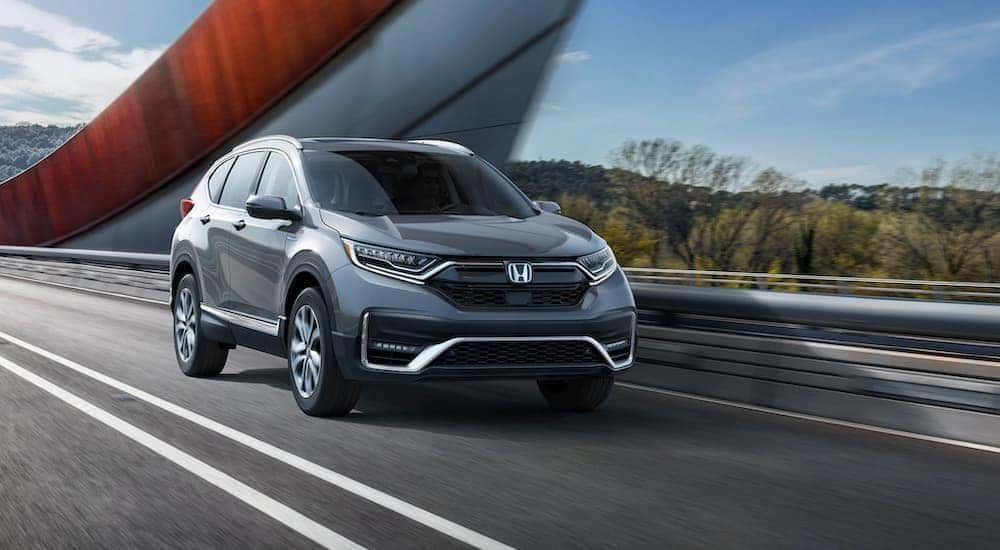
The Third Generation of CR-V
A major turning point occurred in the development of the Honda CR-V with the third-generation model, which first hit the roads in 2007. Gone were the horizontal swinging rear trunk with the exterior-mounted spare tire, replaced with a more accessible liftgate, with the donut spare tire efficiently stowed below the trunk. In addition, the overall shape was more rounded, with an appearance akin to the Odyssey minivan but with a higher ground clearance of 7.3-inches. The new shape of the third-generation CR-V yielded a slight reduction in passenger space to 103.8 cubic feet. However, clever usage of space by the Honda design team made sure that there were no appreciable changes in actual roominess. In addition, the third generation boasted an improvement in cargo space, a full 72.9 cubic feet with the third row of seats folded down. The 2.4-liter VTEC I-4 engine was retained from the second-generation model but given a bit of an upgrade, producing 166 hp at 5800 rpm and 161 lb-ft of torque at 4200 rpm. Fuel economy improved slightly to an estimated 20 MPG in the city, and 27 MPG on the highway, while the acceleration and performance improved as well. [a] As in prior years, the CR-V came with a standard front-wheel drivetrain, with available all-wheel drive. However, Honda discontinued the 5-speed manual transmission, offering the CR-V with an exclusive 5-speed automatic transmission.The Fourth Generation of CR-V
Drivers only had to wait five years for the fourth-generation CR-V, but it proved to be worth it. The fourth generation was another great leap in appearance, with the front end given a little more length and the overall lines made more aerodynamic. In fact, the 2012 CR-V got a look that would eventually be used for the midsize Pilot SUV. With the new design came a slight increase in the passenger compartment, with up to 104.1 cubic feet for the driver and four passengers. However, there was a slight decrease in trunk space, down to a still-impressive 70.9 inches. The engine was once again improved with the fourth-generation model. While it carried over the powertrain combination of a 2.4-liter i-VTET I-4 matched with a standard 5-speed automatic transmission from the third generation, it again improved performance to 185 hp at 7000 rpm and 163 lb-ft of torque at 4300 rpm. Even with this added power and acceleration, the Honda engineers were able to slightly improve fuel economy, especially on all-wheel drive models that produced an estimated 22 MPG in city driving and 30 MPG on the highway. [a] In addition, the fourth-generation CR-V added an available Real Time all-wheel drivetrain with Intelligent Control System for better overall traction.The Fifth Generation of CR-V
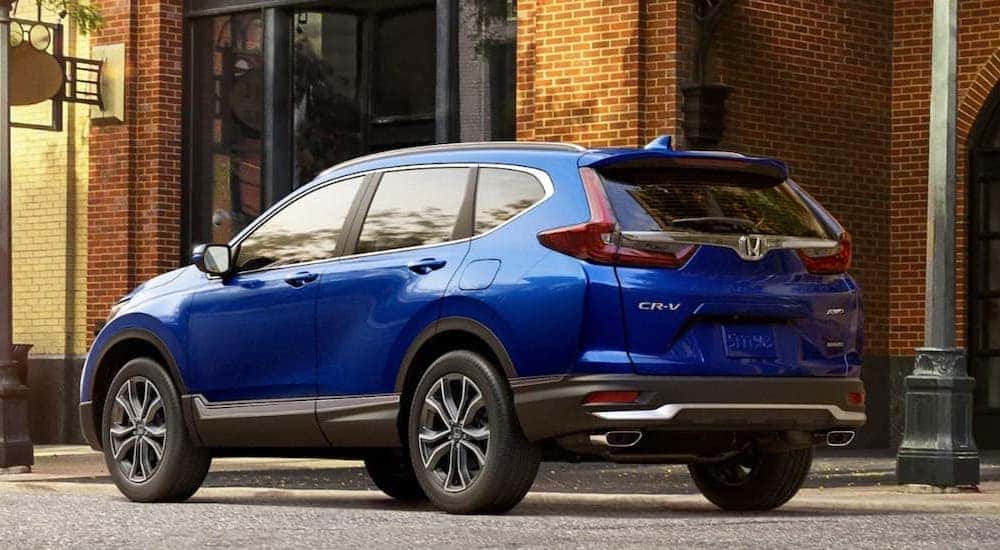
The current model of the CR-V was introduced as the fifth generation in 2017. While it is almost indistinguishable from the fourth generation in terms of exterior looks, the fifth generation made a number of major improvements in performance, safety, and infotainment. While the 2.4-liter i-VTEC I-4 was initially carried over from the fourth generation, it was eventually phased out in favor of a smaller but more powerful 1.5-liter Turbocharged I-4. This engine delivers 190 hp at 5600 rpm and 179 lb-ft of torque at 2000-5000 rpm. In addition, Honda replaced the 5-speed automatic transmission with a continuously variable transmission (CVT) that improved performance and efficiency immeasurably. For example, the fifth-generation CR-V with the 1.5-liter Turbocharged I-4 and available all-wheel drive will give you an astounding 27 miles per gallon in city driving and 33 miles per gallon on the highway, a far cry from the solid but unspectacular fuel economy figures on the first two generations of the CR-V. [a] Honda also upped the technology ante on the fifth-generation of its flagship crossover. The Honda Sensing suite of safety features was added in 2017, eventually becoming standard on all trims of the CR-V with the 2020 model. In addition, Apple CarPlay and Android Auto were added to Honda’s infotainment system for the fifth generation. With all these features becoming standard on the fifth-generation model, it’s no wonder the Honda CR-V has become one of the top-selling models in the United States.